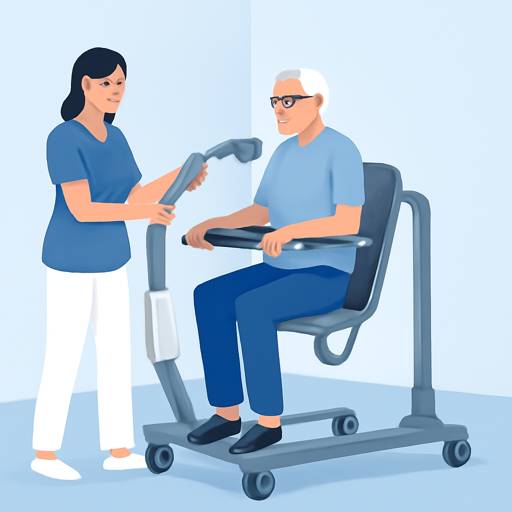
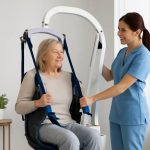
In the demanding environments of modern healthcare and home care, few tasks are as physically taxing and clinically risky as transferring a patient from a seated to a standing position. For decades, caregivers relied on manual techniques that often led to back injuries, falls, and patient anxiety. The power sit to stand lift has fundamentally changed this dynamic. Unlike traditional full-body lifts that require hoisting a patient entirely off a surface, a powered sit-to-stand device is designed for individuals who possess some weight-bearing ability and upper body strength. It works by guiding the patient from a seated posture into a controlled, supported standing position. This is not merely a convenience; it is a paradigm shift that marries biomechanics with dignity. The device typically consists of a sturdy base, a vertical mast, a battery-powered actuator, and a padded sling or harness that wraps around the patient’s back and under their arms. As the lift engages, it gently pulls the patient forward and upward, allowing them to stand with their feet planted on a platform. The power component eliminates the manual cranking or pumping required by older models, ensuring smooth, consistent motion that reduces jolts and jerks. Caregivers no longer have to strain their lumbar spines; instead, they can focus on guiding the patient and monitoring their stability. For patients, the psychological benefit is immense. Being able to participate actively in the transfer—by pushing through their legs—maintains muscle tone and fosters a sense of autonomy that passive lifting simply cannot provide. The result is a tool that serves both safety and rehabilitation goals simultaneously.
Biomechanics and Safety: Why Powered Assistance Matters
The human body is not designed for repetitive heavy lifting, especially when the load is an unpredictable, shifting mass. According to occupational health studies, a caregiver who manually lifts a patient can experience compressive forces on the lower spine exceeding 7,000 Newtons—far above the recommended safety limit. A power sit to stand lift redistributes this load entirely to the machine’s motor and frame. The key advantage lies in the controlled application of force. When a patient stands up, their center of gravity moves forward and upward; a manual transfer often fails to align this trajectory correctly, leading to falls or sudden drops. Powered lifts use electric actuators to apply a steady, slow lift that mimics the natural biomechanics of rising. The foot platform is strategically positioned to encourage proper weight distribution, and the knee pads (if included) prevent the patient from sliding forward. This reduces the risk of orthostatic hypotension—a sudden drop in blood pressure upon standing—because the movement is gradual. Furthermore, many modern power lifts come with emergency stop buttons, backup batteries, and low-profile bases that fit under beds and chairs. The safety margin increases dramatically because the caregiver’s hands remain free to stabilize the patient’s trunk or adjust the sling. In real-world applications, facilities that switch from manual to powered sit-to-stand devices report a 40–60% reduction in staff injury rates within the first year. The devices also minimize skin shear and friction that can occur when a patient is dragged across a bed sheet. For bariatric patients or those with limited range of motion, the power lift provides the consistent torque required to overcome inertia without sudden yanking. This is not a mere convenience; it is an evidence-based intervention that preserves human capital and patient well-being.
Real-World Applications and Care Scenarios
Consider the case of a 78-year-old woman recovering from hip replacement surgery at a rehabilitation center. She can bear weight on her unaffected leg but has limited endurance and significant fear of falling. A manual transfer would require two caregivers and still risk destabilizing her new joint. With a power sit to stand lift , the process becomes a single-caregiver task. The sling is placed behind her back, she grips the handles, and the lift brings her to a standing position in about 12 seconds. She can then pivot to a wheelchair or commode while maintaining partial weight on her legs. The same device is used in long-term care facilities for residents with Parkinson’s disease, where rigidity and bradykinesia make standing initiation difficult. The lift’s forward momentum helps overcome the “freezing” effect that often paralyzes Parkinson’s patients when they try to stand. Another critical scenario is in the home care setting, where family caregivers often have no formal training. A power lift simplifies instructions: place the sling, press the button, and guide the patient. This reduces the likelihood of improper technique that leads to shoulder dislocations or falls. In acute care hospitals, rapid mobilization is a priority to prevent deconditioning and pressure ulcers. Power sit-to-stand lifts enable nurses to get patients out of bed earlier in the recovery process, even when the patient is still hooked to IV poles or monitors (with proper management). A study published in the Journal of Clinical Nursing followed 200 patients in a medical-surgical unit. Those mobilized with a power sit-to-stand lift had a 30% shorter length of stay and significantly lower rates of deep vein thrombosis compared to those who remained bedbound. These devices also excel in bariatric care, where manual lifting is impossible. With weight capacities often exceeding 600 pounds, the power lift becomes the only viable option for safe transfers. In each scenario, the common thread is the empowerment of both patient and caregiver—the machine handles the heavy work, while human attention goes to comfort and safety.
Selecting the Right Device and Integrating into Daily Workflow
Choosing a power sit to stand lift is not a one-size-fits-all decision. Key factors include the patient’s weight capacity, the types of surfaces used (low beds, recliners, wheelchairs), the available floor space, and the caregiver’s level of experience. Devices with wide leg bases provide greater stability but may not fit under all beds, while compact bases offer maneuverability in tight bathrooms. Battery life is critical—most lifts operate on 24-volt systems that can handle 20–30 full transfers per charge, but facilities with heavy usage should invest in models with quick-charge features or spare batteries. The sling design also matters: some patients prefer a vest-style harness that offers more trunk support, while others need a simple back sling to allow free arm movement. Training protocols cannot be overlooked. Even the best lift is dangerous if used improperly. Staff and family caregivers should practice with a volunteer before attempting a transfer with a real patient. Emphasis should be placed on locking the brakes, positioning the patient’s feet flat on the platform, and ensuring the sling is correctly aligned behind the scapulae. Another consideration is maintenance. Power lifts have moving parts that require periodic inspection—checking for frayed cables, loose bolts, and battery connection issues. Facilities should log usage and schedule annual servicing. In many cases, integrating the lift into a broader safe patient handling program yields the best outcomes. This means having a designated lift for each unit, establishing clear criteria for when to use it (e.g., Berg Balance Scale score below 40), and creating a culture where using the lift is seen as standard practice rather than an exception. Some organizations have even developed “lift champions”—staff members who mentor others and troubleshoot issues. By embedding the power sit to stand lift into daily routines, healthcare systems not only reduce injuries but also enhance patient satisfaction. The technology is quiet, efficient, and increasingly intuitive, but its value is only realized through deliberate, systematic adoption.