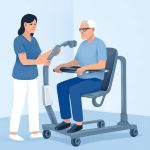
For millions of individuals recovering from surgery, managing chronic conditions, or navigating the natural effects of aging, the simple act of standing up can become a monumental challenge. Traditional manual transfer methods often place an immense physical burden on caregivers, leading to workplace injuries and burnout. Simultaneously, patients can feel a loss of dignity when they require full lift support. The electric sit to stand lift emerges as a sophisticated solution that bridges the gap between total dependence and full independence. Unlike a full-body sling lift, this device is designed specifically for patients who retain partial weight-bearing ability and trunk control. It leverages the patient’s own strength while providing the mechanical advantage needed to complete the transfer safely. The psychological benefits are just as profound as the physical ones; being able to actively participate in one’s own movement reinforces neural pathways and preserves muscle memory. This article explores the functional intricacies, biomechanical advantages, and real-world impact of integrating electric sit-to-stand technology into care plans.
How an Electric Sit to Stand Lift Rebuilds Dignity and Autonomy
The core philosophy behind the electric sit to stand lift is activation, not passivation. A standard full-body lift suspends a patient completely, which can be disorienting and often leads to muscle deconditioning over time. In contrast, the sit-to-stand model requires the patient to sit on a padded sling or saddle seat and place their feet on a stable platform. As the powerful motor engages, the lift gently tilts the patient forward into a standing position. This controlled motion mimics the natural biomechanics of standing—shifting weight from the buttocks to the feet. For the patient, this engagement fosters a sense of agency. They are not being carried; they are being assisted. This distinction is critical for long-term rehabilitation. Occupational therapists frequently use these devices to retrain standing balance in a safe, contained environment. The electric actuator provides a smooth, controlled lift that prevents the jolting or sudden movements that can occur with manual or hydraulic models. Furthermore, the reduced friction on the patient’s skin and the elimination of dragging during the transfer directly decrease the risk of pressure injuries. For the individual, regaining the ability to stand, even with assistance, often translates directly into improved bowel and bladder function, better circulation, and a significant reduction in the fear of falling. The lift becomes a tool not just for moving, but for reclaiming a fundamental human posture.
The caregiver’s experience is equally transformed. Without the lift, a caregiver might have to bear the full weight of another person, often leading to crippling back injuries. The electric sit to stand lift eliminates that risk entirely. The motor does the heavy lifting, while the caregiver only needs to guide the patient and operate the controls. The instability of manual transfers is replaced by a structured, predictable movement. The base of these lifts is typically wide and wheeled, equipped with locking casters for absolute stability during the transfer sequence. Caregivers report feeling exponentially more confident performing transfers with these devices, which in turn improves the quality of care they provide. The result is a win-win scenario: a more active, engaged patient and a physically safer, more sustainable work environment for the care team.
The Biomechanics and Engineering Behind Safe Standing Transfers
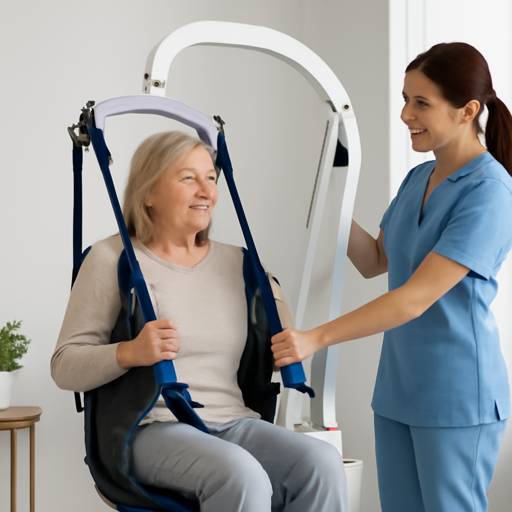
Understanding the engineering of an electric sit to stand lift is essential to appreciating its safety profile. The most critical component is the load-bearing column, often constructed from high-grade steel or aluminum. This column houses the electric actuator and a fail-safe braking system. If the power fails, a manual emergency release valve allows the lift to lower the patient gently, preventing panic or injury. The base of the lift is designed for maximum stability; many models feature a spreadable leg system that widens during the lift to encompass the chair or wheelchair. This design prevents the lift from tipping, even if the patient leans or shifts their weight unexpectedly. The footplate is another area of sophisticated engineering. It is angled slightly and textured to provide excellent traction, ensuring the patient’s feet do not slip during the standing motion. Some advanced models include adjustable kneepads that provide additional forward stability by stabilizing the knees against the lift frame. This triad of support—feet on the platform, knees against the pad, and body in the sling—creates a triangulated stable system that is far safer than a two-point manual transfer.
The electric motor itself is a marvel of modern medical engineering. It is designed for quiet operation to avoid startling the patient and operates on a rechargeable battery system. This battery autonomy is vital; it allows the lift to be used at a bedside without being tethered to a wall outlet. The control device, usually a simple hand pendant, allows the caregiver to stop, start, or reverse the lift at any point. This level of control is impossible with manual lifts. The standard weight capacity for these lifts ranges from 350 to 600 pounds, accommodating a wide range of patient sizes. The slings themselves are also designed with safety in mind. They are made from breathable, durable mesh or upholstery-grade material and are often color-coded for size. Quick-attach loops allow for rapid hook-up and release, ensuring the transfer does not exhaust the patient or the caregiver. The mechanics prioritize a natural center of gravity, keeping the patient close to the mast column to avoid leverage forces. This design reduces the risk of the lift toppling sideways. When you compare the controlled, slow electric ascent to the jerky, uneven lift of a manual model, the superiority for fragile skin and healing bones becomes immediately clear. The engineering prioritizes gradual motion, mimicking the deliberate pace of a physical therapist’s guided stand.
Real-World Integration: Case Studies from Home Care and Skilled Nursing
The theoretical benefits of the electric sit to stand lift are best illustrated through specific application scenarios. Consider the case of a 72-year-old male recovering from a total hip replacement. Standard protocol strictly forbids bending past 90 degrees (hip flexion precautions). A manual transfer risks violating these precautions if the patient slumps. However, the structured geometry of an electric sit to stand lift allows the patient to be positioned with their hips at the correct angle, and the lift action provides the necessary height without axial rotation or excessive hip flexion. The precise lift path ensured he could stand to use a bedside commode without violating his surgical protocol. The outcome was a significantly shorter hospital stay and a reduction in post-operative complications. In another scenario, a caregiver working in home health for a patient with advanced multiple sclerosis faced daily back pain. The patient had substantial lower body weakness but could still follow commands. Integrating a compact, mobile electric sit to stand lift into the home environment allowed a single caregiver to safely transfer the patient from a recliner to a wheelchair three times a day. The caregiver reported a complete elimination of physical strain, and the patient experienced fewer episodes of muscle spasms due to the smoother, more controlled movement of the lift compared to the previous manual pivot transfer.
In skilled nursing facilities, these lifts are being used proactively to preserve resident mobility. A facility in Ohio implemented a policy where any resident who scored below a certain threshold on the Berg Balance Scale was provided a standing program using an electric sit to stand lift. The results over six months showed a measurable improvement in standing endurance and a 40% reduction in falls during transfers. The lift was not seen as a last resort but as a rehabilitation tool. Staff members noted that residents who were previously considered "two-person assist" were now manageable by a single trained staff member using the lift, reducing wait times for toileting and reducing incontinence episodes. The device also shined in bariatric applications. For patients weighing over 300 pounds, manual transfers are simply dangerous. The electric lift provides the necessary mechanical advantage to move a heavier patient safely, preventing injury to the staff while maintaining the patient’s dignity. By using a sit-to-stand approach instead of sling-based full lifts, bariatric patients reported feeling less "institutionalized" and more in control. The case studies consistently point to a single truth: when applied correctly, this technology reduces injury, improves clinical outcomes, and restores a fundamental sense of function. The lift becomes a partner in care, not just a piece of equipment. The transition from chair to upright position is no longer a dreaded event but a manageable, safe, and empowering part of the daily routine.